Name: Farm to School
Location: 40 states in the USA
Years: 2004- Present
Founded by: The Center for Food & Justice
The National Farm to School Network supports community-based food systems, strengthen family farms, and improve student health by reducing childhood obesity. More than 30 million children eat a school lunch five days a week, 180 days a year. The Farm to School approach helps children understand where their food comes through providing local food at each of these meals. They also greatly focus on the introduction of local foods into the school curriculum. This is done through school gardens, farm tours, farmer in the classroom sessions, chefs in the classroom, culinary education, educational sessions for parents and community members, visits to farmers’ markets. from and how their food choices impact their bodies, the environment and their communities at large.


In 2000, the Center for Food & Justice started the four year National Farm to School Project funded by the USDA Initiative for Future Agriculture and Food Systems (The National Farm to School Program started farm to school movement across the country. It assited organizations in starting up and sustaining farm to school efforts, fundraising, and providing informational resources, education and training for stakeholders. In 2007, with support by a $2.4 million grant the W. K. Kellogg Foundation, the National Farm to School Network was born. Consisting of eight regional agencies and national staff, this network provides free training and technical assistance, information services, networking, and support for policy, media and marketing activities. Farm to School programs have spread to approximately 400 in 2004, 1,000 in 2007 and over 2,000 in 2009 spanning 40 states.
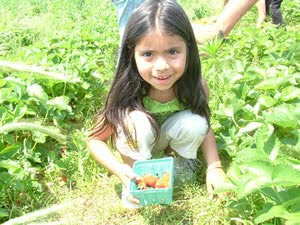
Farm to School brings healthy food from local farms to school children nationwide. The program teaches students about the path from farm to fork, and instills healthy eating habits that can last a lifetime. At the same time, use of local produce in school meals and educational activities provides a new direct market for farmers in the area and mitigates environmental impacts of transporting food long distances.
"The Benefits of Farm to School:
- Strengthen children’s and communities’ knowledge about, and attitudes toward, agriculture, food, nutrition and the environment.
- Increase children’s participation in the school meals program and consumption of fruits and vegetables, thereby improving childhood nutrition, reducing hunger, and preventing obesity and obesity-related diseases.
- Benefit school food budgets, after start-up, if planning and menu choices are made consistent with seasonal availability of fresh and minimally processed whole foods.
- Support economic development across numerous sectors and promote job creation.
- Increase market opportunities for farmers, fishers, ranchers, food processors and food manufacturers.
- Decrease the distance between producers and consumers, thus promoting food security while reducing emissions of greenhouse gases and reliance on oil."


